If you look around today, it often feels like the world is working against your health. Fast food is available on every corner, fruits and vegetables are grown with chemicals, and pollution is a part of daily life in most cities. Add to that long working hours, stress, and lack of movement, and it’s no surprise that people feel tired, unwell, and out of balance.
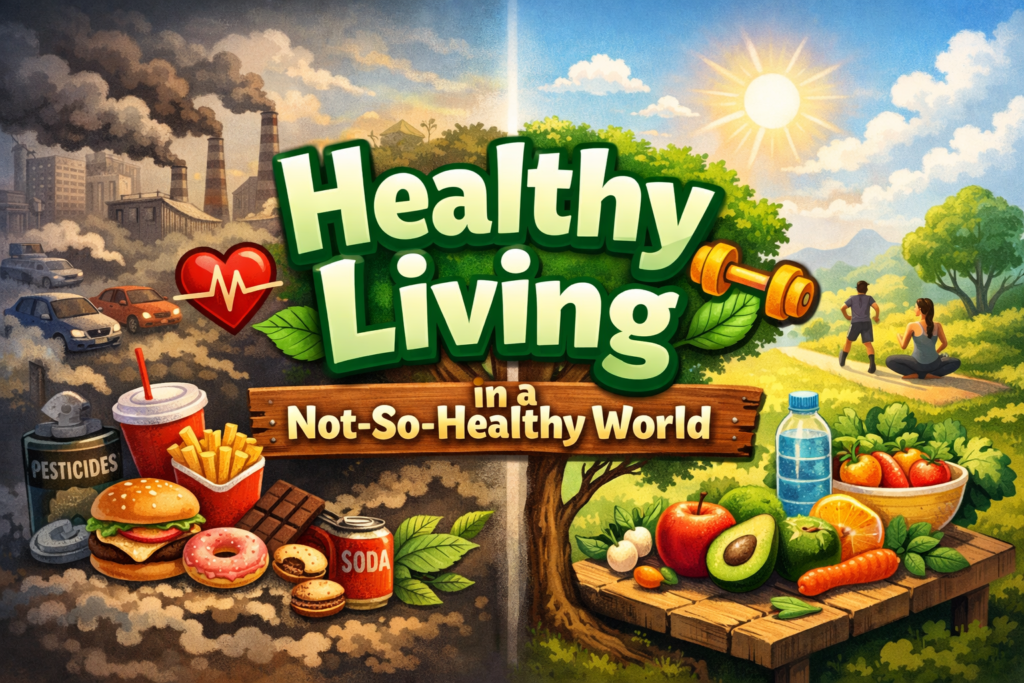
But here’s the good news: even in this environment, it’s absolutely possible to stay healthy. You don’t need extreme diets or complicated routines. Small, consistent choices can make a huge difference over time.
Let’s look at some practical ways to maintain your health in today’s world.
1. Focus on Real, Simple Food
In a world filled with packaged and processed foods, the simplest rule is also the most effective: eat more real food.
Real food includes:
- Fresh fruits and vegetables
- Whole grains
- Nuts and seeds
- Lentils and legumes
- Home-cooked meals
Processed foods often contain excess sugar, salt, preservatives, and unhealthy fats. These ingredients may improve taste and shelf life, but they slowly damage your metabolism, gut health, and energy levels.
You don’t need to eliminate junk food completely. Instead, follow the 80/20 rule:
- 80% of your meals should be simple, home-cooked, and nutritious.
- 20% can be your favorite treats.
This approach is realistic and sustainable.
The modern world may not always support a healthy lifestyle, but with the right awareness and simple routines, you can still build a strong, balanced, and energetic life. Your health is not determined by the world around you—it’s shaped by the choices you make each day.
2. Be Smart About Produce and Pesticides
One of the biggest concerns today is the use of pesticides on fruits and vegetables. While it’s hard to avoid them completely, you can reduce your exposure.
Here’s how:
- Wash produce thoroughly under running water.
- Soak fruits and vegetables in a bowl of water with a little salt or vinegar for 10–15 minutes.
- Peel when appropriate (like cucumbers or apples, if not organic).
- Buy seasonal and locally grown produce whenever possible.
Seasonal produce is often fresher, cheaper, and requires fewer chemicals because it’s grown in natural conditions.
If your budget allows, prioritize organic versions of foods you eat frequently, especially leafy greens and thin-skinned fruits.
3. Stay Hydrated—It’s More Important Than You Think
Many people underestimate the importance of water. Dehydration can cause fatigue, headaches, poor digestion, and low concentration.
Make it a habit to:
- Drink a glass of water after waking up.
- Carry a water bottle throughout the day.
- Replace sugary drinks with water, coconut water, or lemon water.
A simple rule: if you feel tired or hungry, drink water first. Often, your body is just dehydrated.


4. Protect Yourself From Pollution
In many cities, pollution is unavoidable. While you can’t control the air outside, you can take steps to protect yourself.
Some practical habits include:
- Avoid outdoor exercise during peak traffic hours.
- Use a quality mask when pollution levels are high.
- Keep indoor plants like snake plant or peace lily.
- Ventilate your home during times when air quality is better, such as early morning.
You can also support your body by eating foods rich in antioxidants, such as:
- Berries
- Citrus fruits
- Spinach
- Carrots
- Turmeric and ginger
These help your body fight the damage caused by pollutants.
5. Move Your Body Every Day
You don’t need a gym membership or a complicated workout plan. The human body is designed to move, and even simple activities can keep you healthy.
Aim for at least 30 minutes of movement daily:
- Brisk walking
- Cycling
- Yoga
- Stretching
- Playing a sport
If you sit for long hours, stand up and stretch every 60–90 minutes. Small movements throughout the day are better than being inactive and then exercising once a week.
6. Prioritize Sleep Like It’s Medicine
Sleep is often the first thing people sacrifice, but it’s one of the most powerful tools for good health.
Poor sleep affects:
- Immunity
- Weight
- Mood
- Concentration
- Hormone balance
Try to:
- Sleep and wake up at the same time every day.
- Avoid screens at least 30–60 minutes before bed.
- Keep your bedroom cool, dark, and quiet.
Most adults need 7–8 hours of quality sleep every night.
7. Reduce Stress and Mental Overload
Health isn’t just physical. Constant stress can be as harmful as junk food or pollution.
You don’t need a long meditation routine. Start with simple habits:
- Take a 5–10 minute walk without your phone.
- Practice deep breathing.
- Spend time with family or friends.
- Limit negative news and social media.
Even small moments of calm can help reset your mind and body.
8. Build Strong Daily Habits
Instead of trying to transform your life overnight, focus on small daily habits. These are easier to maintain and more effective in the long run.
For example:
- Drink water first thing in the morning.
- Eat at least one fruit every day.
- Walk after dinner.
- Sleep before midnight.
When these small actions become routine, your health improves naturally.
9. Read Labels and Make Better Choices
You don’t have to be perfect, but becoming aware of what you’re eating helps a lot.
When buying packaged foods:
- Check the ingredient list.
- Avoid products with long lists of unfamiliar chemicals.
- Choose items with less sugar, salt, and artificial additives.
Simple swaps can make a big difference:
- Chips → roasted nuts
- Sugary drinks → lemon water
- White bread → whole grain bread
10. Remember: Consistency Beats Perfection
The biggest mistake people make is trying to be perfect. They follow strict diets or extreme routines, then give up after a few weeks.
Health is not about perfection. It’s about consistency.
If you:
- Eat mostly home-cooked food
- Stay active
- Sleep well
- Manage stress
You’re already doing better than most people.
Final Thoughts
Yes, the modern world has its challenges—junk food, pesticides, pollution, and stress are real issues. But your daily habits still have the greatest impact on your health.
You don’t need expensive supplements, trendy diets, or complicated plans. Start with simple steps:
- Eat real food
- Move daily
- Drink enough water
- Sleep well
- Stay mentally calm
Over time, these small actions build a strong foundation for long-term health.
In the end, good health isn’t about avoiding the world. It’s about learning how to live wisely within it.
